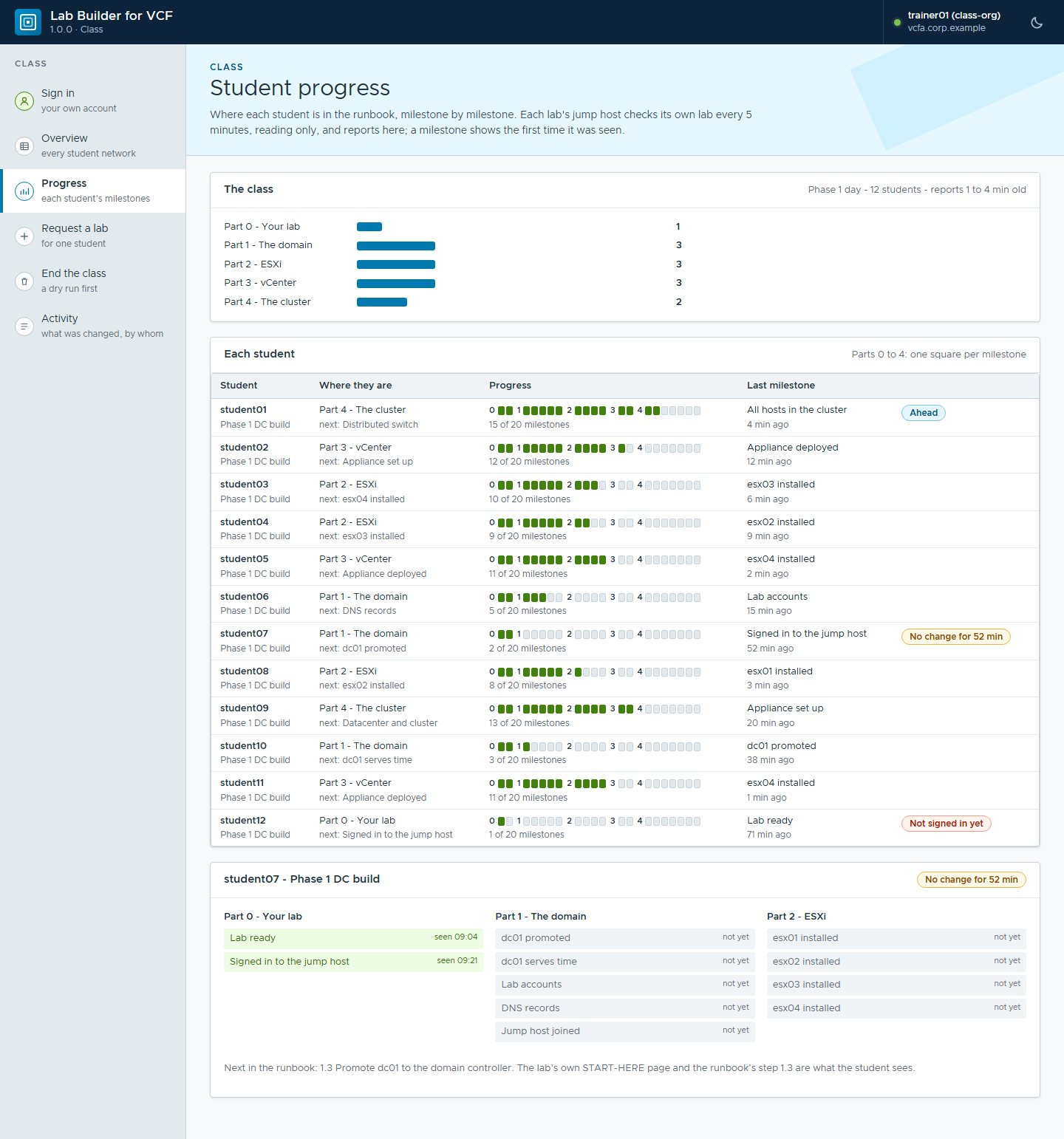
A VCF lab each
What a student actually receives: a private nested VCF stack, separated by NSX VPCs and the site’s own directory, handed out phase by phase so a lesson starts where the trainer wants it to. How many run at once is up to the hardware.
What a student actually receives: a private nested VCF stack, separated by NSX VPCs and the site’s own directory, handed out phase by phase so a lesson starts where the trainer wants it to. How many run at once is up to the hardware.
A classroom needs a complete VCF stack per student, and hand-building them does not scale. One site file, a catalog of nested labs handed out phase by phase, and a kit that installs with no internet at all.
A VCF Automation 9.1 catalog that builds a complete nested VCF lab per request, each in its own VPC. How it differs from capturing a hand-built lab, and what building from code buys you.
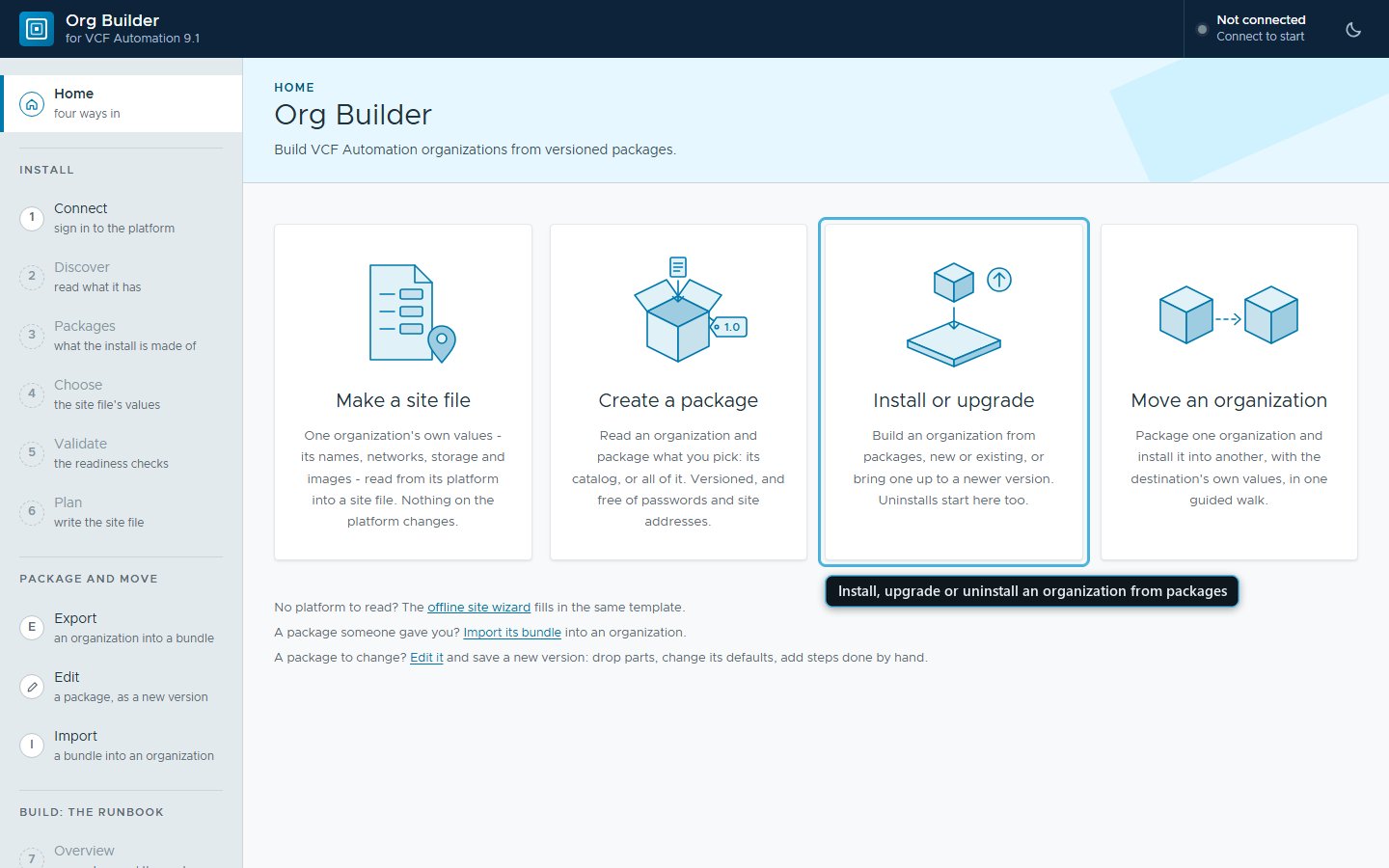
The nested-lab catalog as three Org Builder packages that install, upgrade and uninstall a VCF Automation organization. How made and found keep an uninstall honest, and what two live runs proved.
Org Builder’s second worked example, the bring-your-own-image case: a team catalog that boots from an image, packaged without the image file, edited to ask for each site’s own copy at the right moment, and installed in production. Plus what VCF Automation’s own OVA export does with the same blueprint.
Org Builder’s first worked example: two blueprints and the property groups they read, exported from a development organization and imported into production with production’s own values.
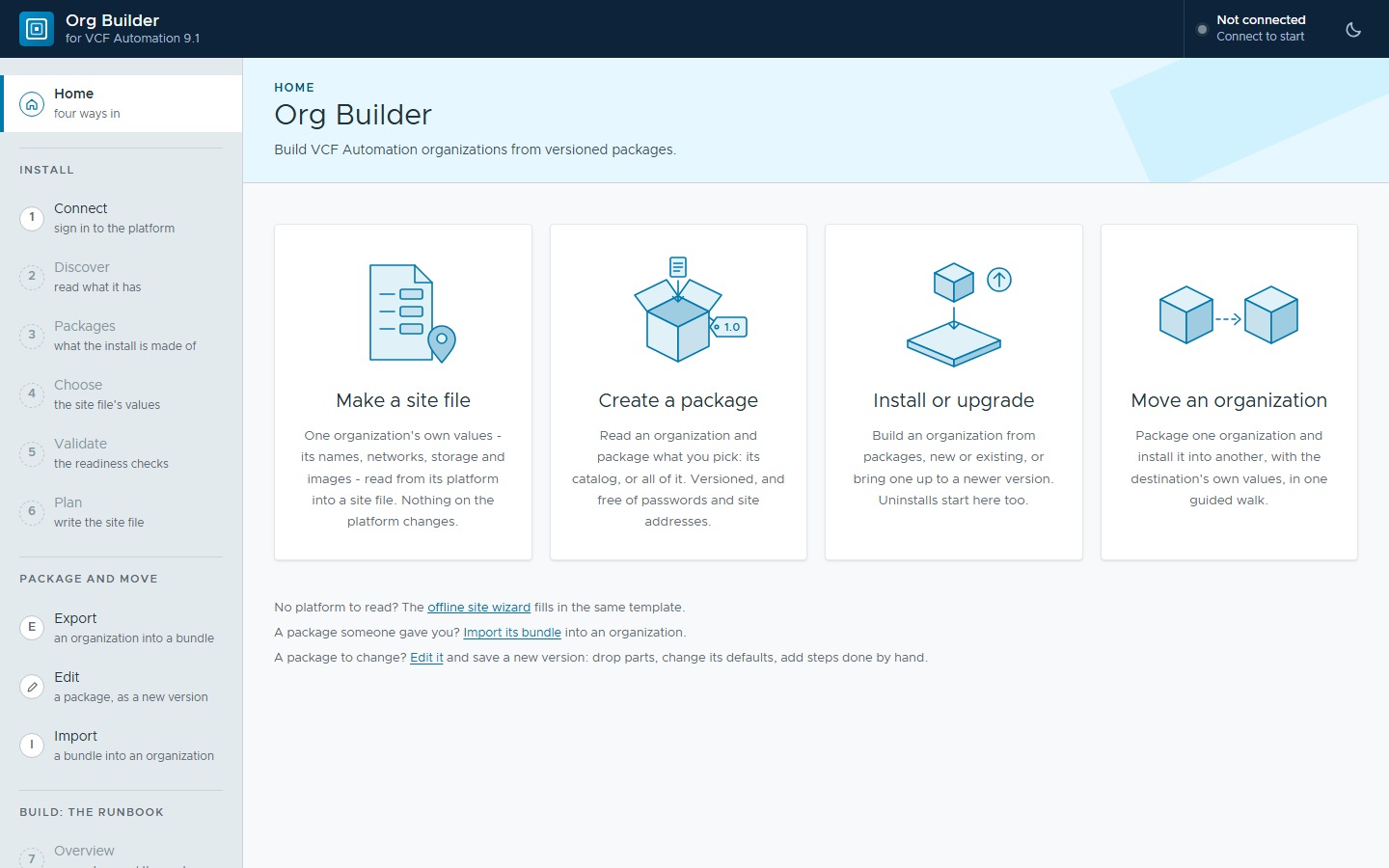
Why we built Org Builder, our tool for VCF Automation organizations: catalog services built in one organization have to reach others, and rebuilding them by hand or scripting every API call doesn’t scale. Packages, site files and versioned releases, in brief.
A complete guide to the VCF Automation 9.1 blueprint designer: every palette item, the YAML behind it, every field the platform accepts, recipes and traps. Every snippet validated, dry-run or deployed.
A self-contained HTML build report, down to a Gantt chart that spots the reboots. Plus the Session 0 traps, like mangled vmtoolsd arguments and ejecting an ISO with no Explorer, that cost real hours.
One script runs at every startup until the build is done. Flag files make each step run once, a state file keeps true timings across reboots, and at the end it cleans up, reports and deletes itself.