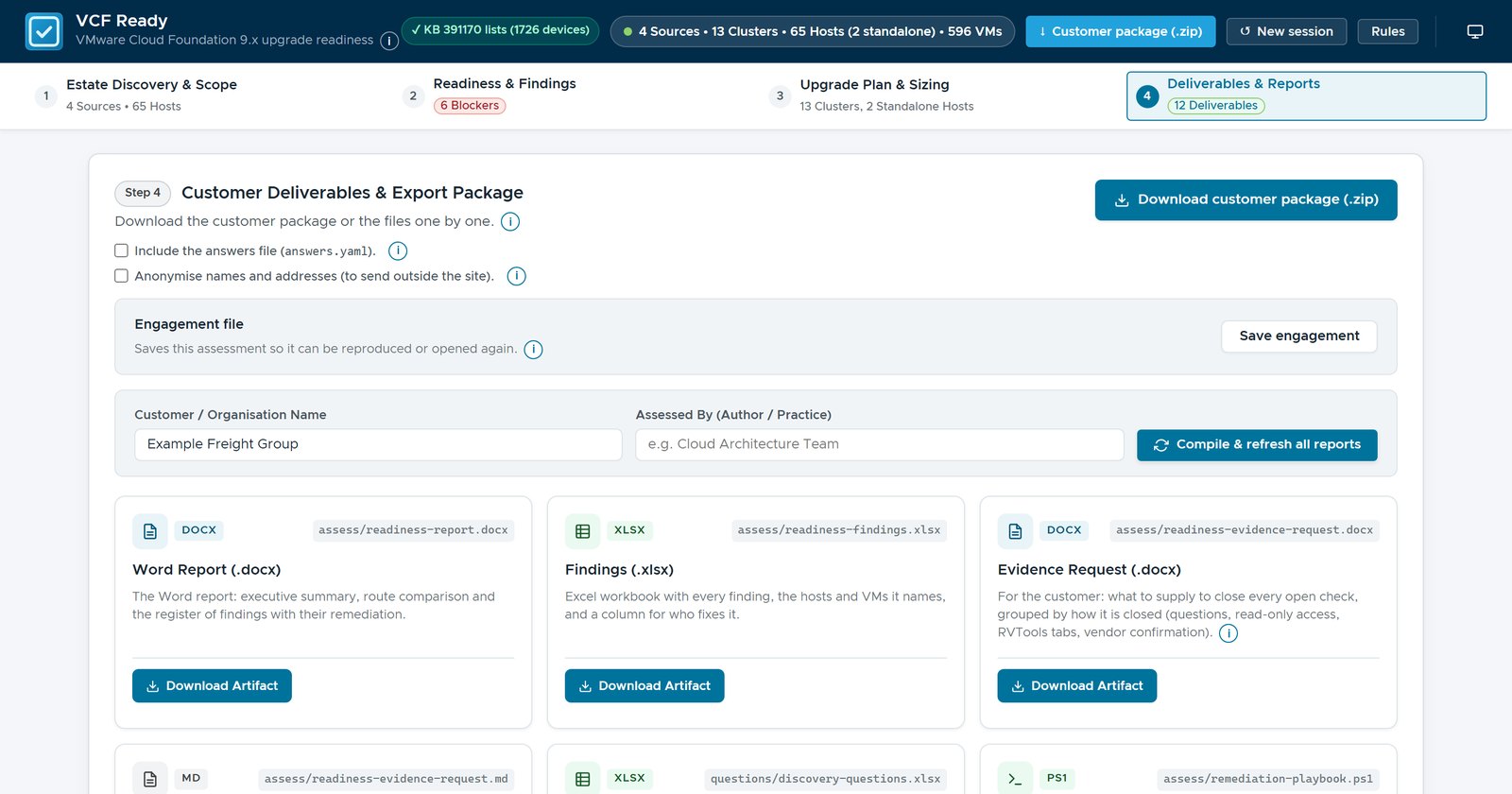
The deliverables, and sharing them without the customer
Part 3 of VCF Ready: what Step 4 hands over, who each deliverable is for, why they all tell the same story, and how an assessment leaves the customer’s site without the customer in it.
Part 3 of VCF Ready: what Step 4 hands over, who each deliverable is for, why they all tell the same story, and how an assessment leaves the customer’s site without the customer in it.
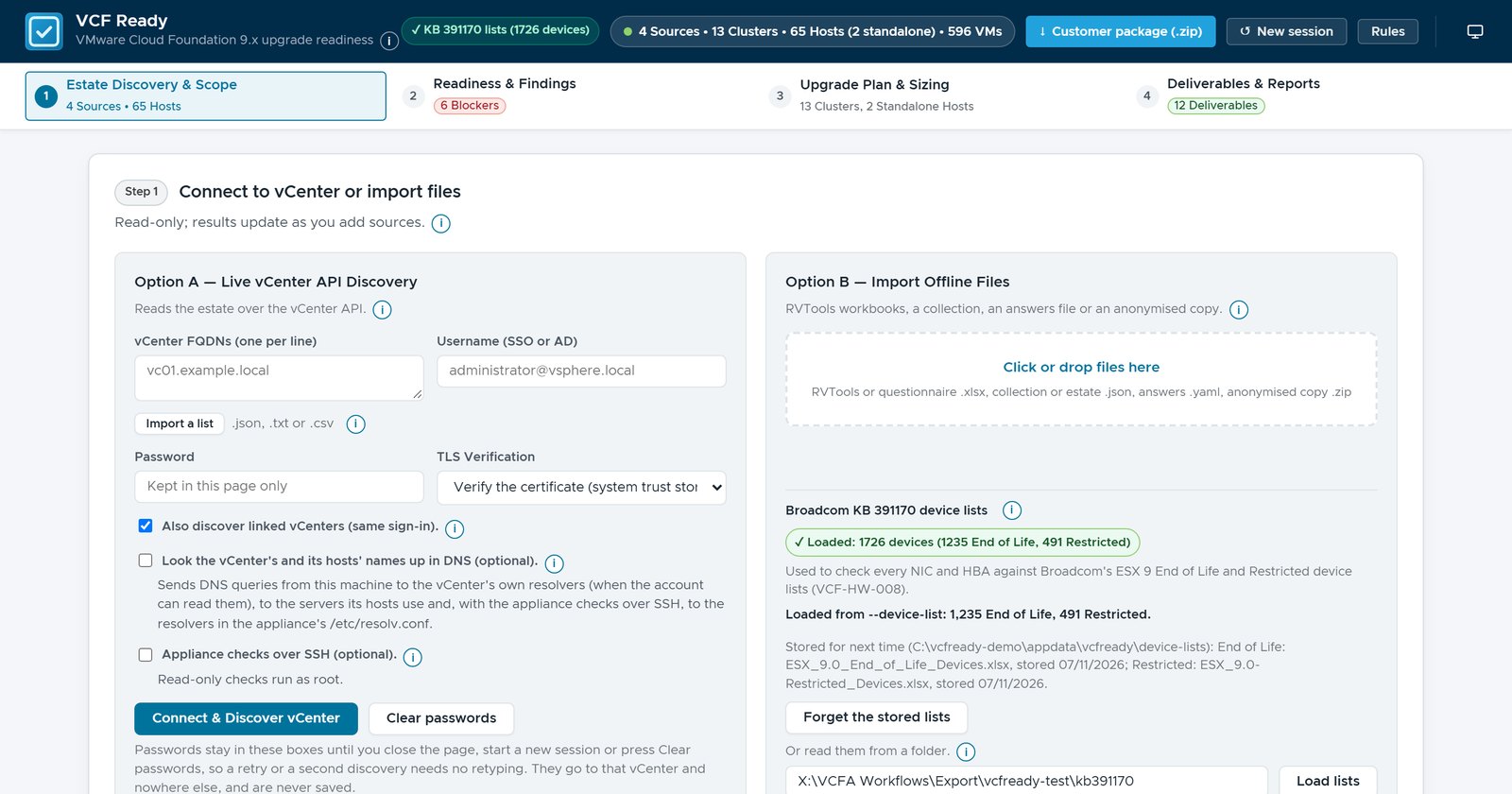
Are you VCF ready? Are you sure? The answer is spread across hundreds of Broadcom articles and pages. Introducing VCF Ready, our upgrade readiness tool: what it reads, what it finds, how it turns open questions into a workshop, and why every check cites Broadcom.
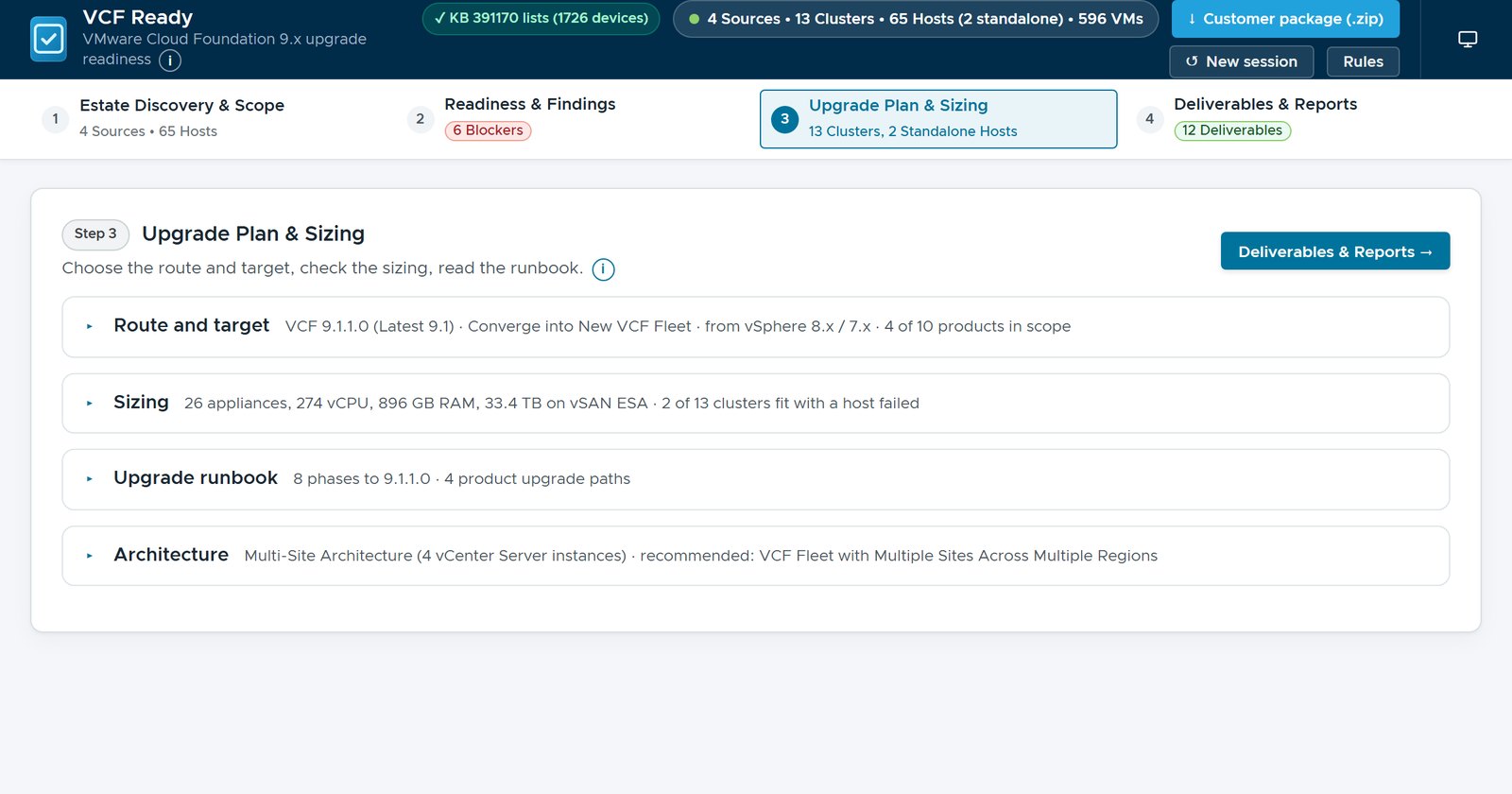
Part 1 read the estate and found what stands in the way. Part 2 is the plan: how VCF Ready brings Broadcom’s VCF Upgrade Planner, Planning and Preparation Workbook and design blueprints onto one page, filled in from the estate, so the route, the phases, the size of the management domain and the hosts to buy are all in view.

Plain VPC subnets silently blackhole a nested ESXi host. Why, and the trunk subnet and binding map design that makes nested labs work as an ordinary NSX VPC tenant.

Addresses pending for ever, a retryable error that never stops retrying, and an ordering rule the docs don’t tell you: in a self-service NSX VPC, the load balancer must exist before the namespace that uses it.
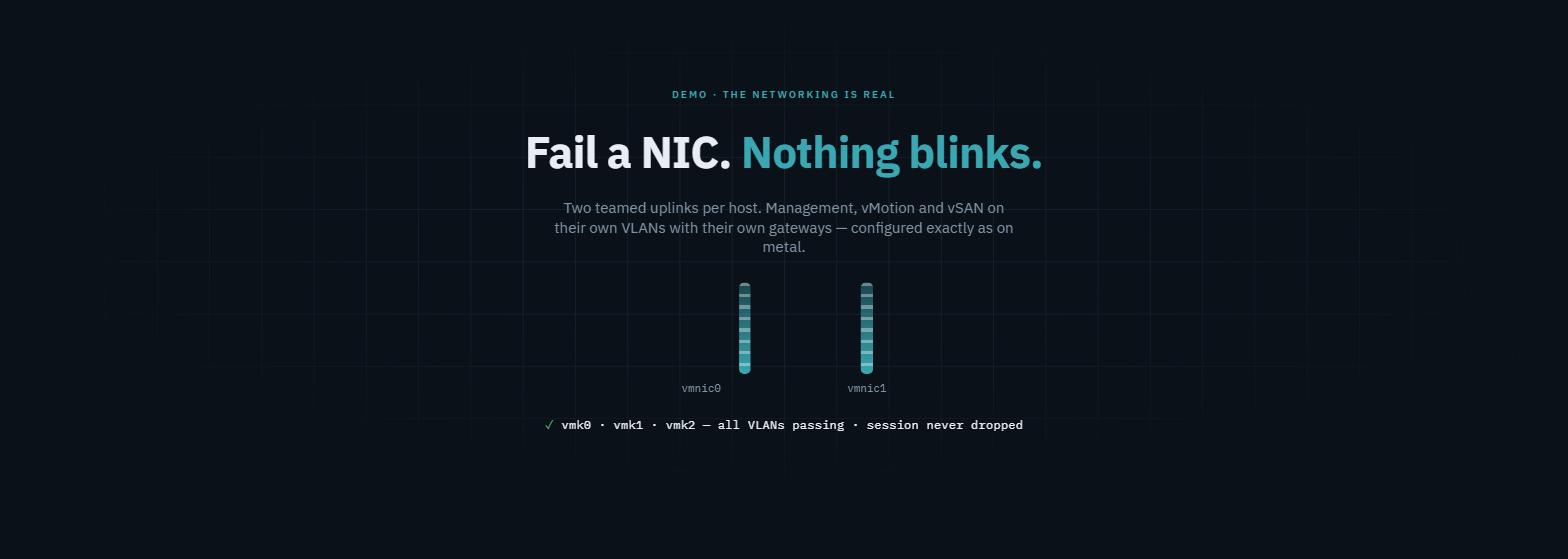
A second vNIC on a nested host adds no physical redundancy, so why add it? We expected bringup to want one, and pulling vmnic0 mid-SSH proved the trunk copes: 0% loss, session intact.

The nested ESXi appliance sat at ‘waiting for DHCP’ for ever. VPC subnets don’t hand out addresses: the VM Service does, through cloud-init, sysprep or OVF guestinfo, depending on the guest.